



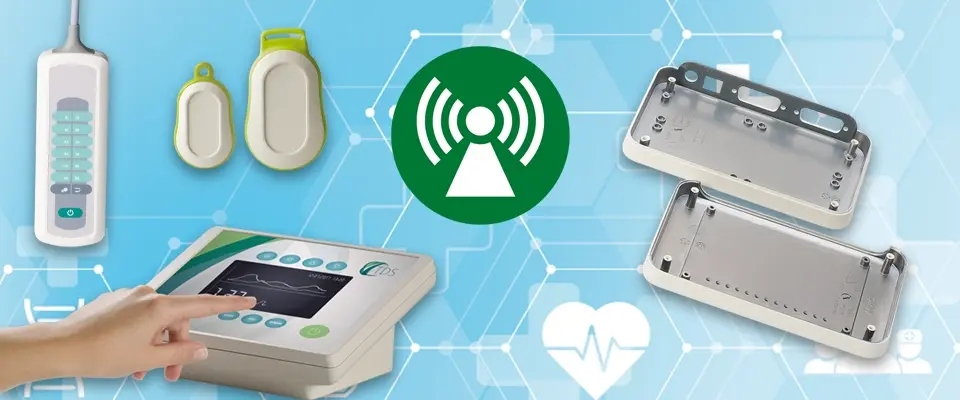
Why is electromagnetic compatibility so important for plastic enclosures?
Plastic enclosures are used in many applications due to their low weight, functionality and robustness. However, unlike metal enclosures, plastics do not provide electromagnetic shielding. As a result, electromagnetic radiation can more easily penetrate the interior of the device or be emitted to the outside. In various areas of application, such as medical technology, the fault-free functioning of a system must be guaranteed.
To ensure this reliability for enclosures, OKW offers the customisation option of EMC aluminium coating. Electromagnetic compatibility (EMC) refers to the ability of a system to operate reliably within its electromagnetic environment without causing interference to other devices and without being impaired by external electromagnetic influences.
The process of EMC coating in a high vacuum
The coating drum is prepared outside the coating system. The housings are mounted around the drum using appropriate fixtures. The aluminium is placed in the evaporator shaft in the drum. Aluminium is then placed in the evaporator shaft inside the drum. The coating is applied under high vacuum conditions. During the coating process, the aluminium evaporates and deposits evenly onto the surface of the plastic housings.
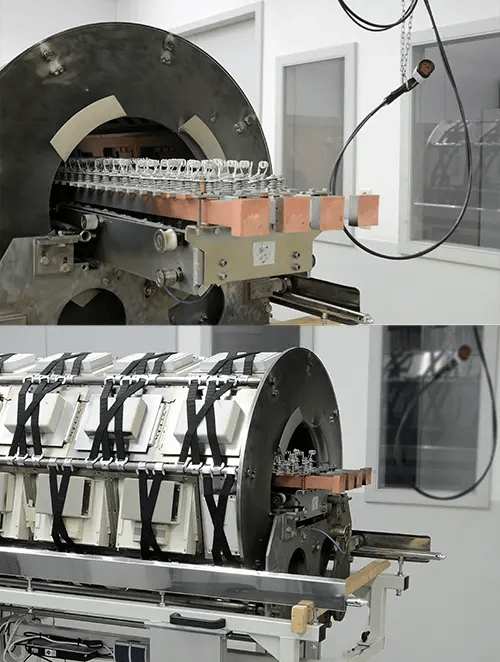
Preparation of the coating drum
Why EMC coating is so important for plastic enclosures?
EMC coating safeguards the systems installed inside the enclosures by preventing malfunctions caused by electromagnetic interference. In addition, EMC aluminium coating enhances the reliability of devices, ensuring they operate correctly even in complex environments with high levels of high interference.
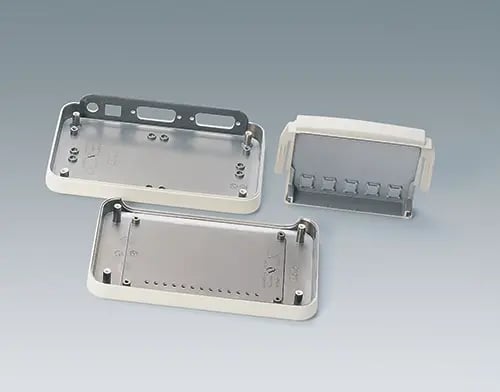
Coated plastic housing
Electromagnetic compatibility plays a central role in medicine
In areas such as medical technology, it is particularly important that plastic housings are equipped with an EMC coating. In the medical field, it is essential to ensure that every device operates without interfering with other equipment and without being affected by external electromagnetic influences. Any disruption could impair proper functioning and must therefore be avoided. Such disturbances may lead to devices no longer working reliably or, in some cases, even result in incorrect diagnoses. A hospital is also a highly complex environment with numerous potential sources of electromagnetic interference for electronic systems. Moreover, the increasing use of wireless technologies, such as Wi Fi, Bluetooth and 5G, further intensifies the electromagnetic environment. Mobile devices are especially affected, as they are more exposed to external interference sources.
Recesses – an important component in EMC coating
Recesses in the context of EMC coating of plastic enclosures are non-conductive areas that are intentionally left uncoated. They prevent short circuits and help control the grounding concept of the enclosure. Recesses also enable antenna signals to pass through and keep contact areas for displays and control elements free of conductive material. However, the placement and design of these recesses depend strongly on the enclosure geometry and the specific EMC requirements, ensuring optimal shielding while preserving all necessary device functions.

Leave Your Feedback