



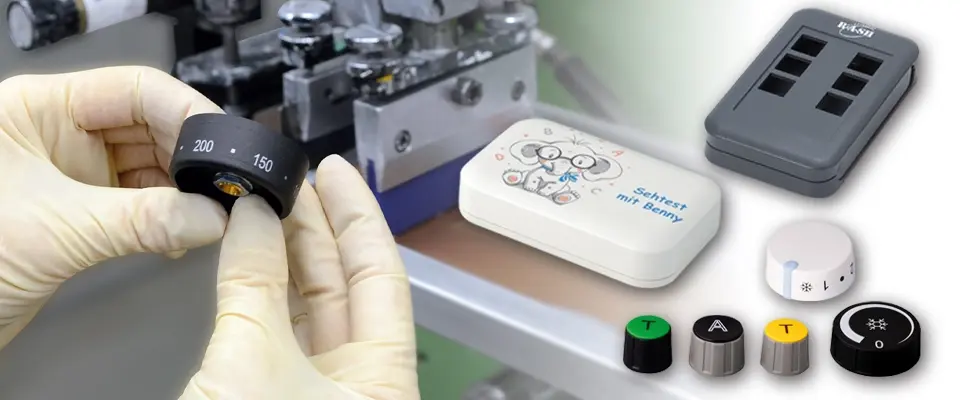
Individual design is often essential for electronic enclosures, helping products stand out and create a unique identity. Printing on plastic enclosures plays a key role in this process. There are several printing techniques available, each with distinct characteristics and advantages, chosen based on application and quality requirements. This article provides an overview of three common methods and their importance in printing on plastic enclosures.
Screen printing
This proven printing method works on the principle of stencil printing. A special screen with a fine mesh is prepared, and the ink is pressed through it using a squeegee. First, the desired design is transferred onto the screen using light-sensitive emulsions. The screen is then exposed and developed, leaving the unexposed areas open—allowing the ink to pass through and create the print.
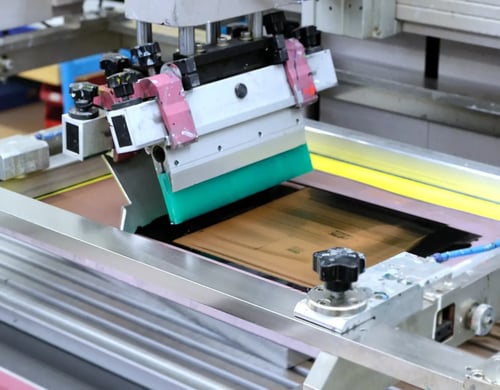
Screen printing also enables large-area housing printing
Advantages of screen printing
-
High colour intensity: Screen printing enables high density and opacity of colours – particularly important for vibrant and eye-catching designs.
-
Durability: Thanks to its robust ink, this printing method offers excellent resistance to abrasion and chemical exposure.
When should you choose screen printing?
Screen printing is ideal for high-volume production, as the initial screen setup is time-consuming and costly. It’s commonly used for large designs on flat surfaces.
Tampo printing
Tampo printing is an indirect process where ink is transferred to the product using a silicone pad. This technique makes it possible to print on irregular or curved surfaces, making it ideal for plastic enclosures and tuning knobs. The process involves several steps: first, ink is placed in the recesses of a printing plate; then the pad picks up the ink by pressing into the plate; finally, the ink is transferred onto the object.
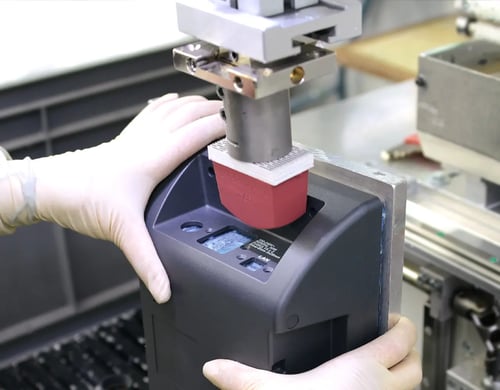
Tampo printing on a plastic housing
Advantages of tampo printing
- High level of detail: This printing method enables highly detailed designs – ideal for logos and small text.
- Flexibility: Printing on a wide variety of surfaces and even irregular shapes is easily possible.
- Cost-effectiveness for small quantities: Compared to screen printing, tampo printing is more cost-effective for smaller production runs.
When should you choose tampo printing?
Tampo printing is often chosen when precision and fine detail are essential. A notable application is circular printing on tuning knobs, such as for scales.
Digital printing
This printing process works differently from the methods mentioned above. Here, digital image data is transferred directly onto the material using high-quality inkjet printers, which apply ink in fine droplets. There are several types of digital printing, such as UV printing and eco-solvent printing, each offering unique properties and application possibilities.
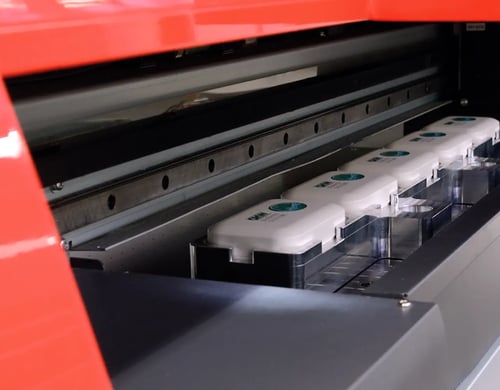
Digital printing on plastic housing
Advantages of digital printing
- Shorter production times: Printing directly from digital image data streamlines the process, resulting in much shorter lead times.
- Customising: Digital printing makes it easy to customise individual designs. Tailor-made solutions are easy to implement.
- Environmental Friendliness: Modern digital printing often uses eco-friendly inks and significantly reduces material waste compared to traditional printing methods.
When to Choose Digital Printing?
Digital printing is increasingly chosen for projects that require customised designs—such as images, colour gradients and unique layouts—as well as for small production runs. It’s also a popular choice for prototyping and limited batches.
Comparing Printing Processes
Below is a side-by-side comparison of the three printing methods based on key criteria:
Print quality
- Screen printing: high colour coverage
- Tampo printing: high level of detail
- Digital printing: high level of detail
Sterility
- Screen printing: robust and durable
- Tampo printing: good for irregular surfaces
- Digital printing: high level of detail
Quantity
- Screen printing: medium to large quantities
- Tampo printing: ideal for small to medium quantities
- Digital printing: possible even for very small quantities
Material variety
- Screen printing: wide range of materials
- Tampo printing: especially for irregular shapes
- Digital printing: more suitable for plastics
Set-up time
- Screen printing: long, as screens must be created
- Tampo printing: shorter than screen printing
- Digital printing: very short
Customisation
- Screen printing: limited suitability
- Tampo printing: well-suited
- Digital printing: excellently suited
Conclusion
When selecting the best printing method for plastic housings, several factors should be considered: What does the design involve? What are the required quantities and budget? What standards must the finished product meet? Screen printing is ideal for large, durable designs, while tampo printing excels at accurately applying smaller details to irregular surfaces. Digital printing, by contrast, provides a fast and flexible solution—perfect for personalised or variable prints.Each technique has its own advantages, so the choice depends on the specific requirements of your project. It’s wise to consult the housing manufacturer to determine the most suitable method. This not only ensures optimal product quality but also presents your brand in the best possible light.

Leave Your Feedback